



TRADE INSIGHTS
Field pricing in Ratnapura: what changes between mine and export desk
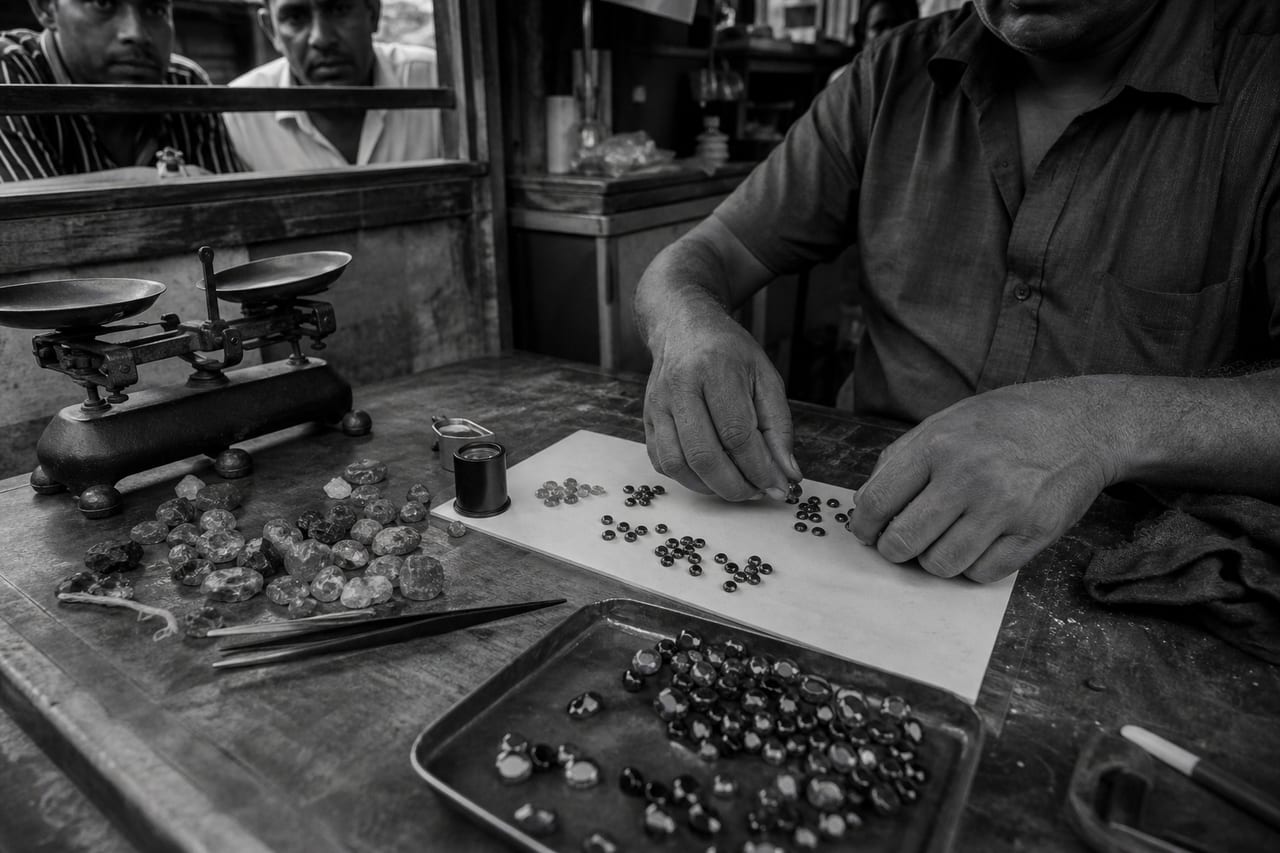
A rough sapphire bought in Nivithigala and the same stone faceted in Colombo do not price on the same spreadsheet row. Field buyers work in yield guesses, treatment risk, and who is in the room. Exporters work in cert labs, buyer geography, and payment terms.
Digital tools fail when they assume one price field per stone. The trade needs models that respect where the stone sits in the pipeline.
What field buyers actually price
- Rough weight and shape: Can this become a 2 ct oval or only a shallow cushion?
- Color concentration: Is the blue in the skin or through the piece?
- Inclusion risk: Silk and feathers that survive heating vs those that don't.
- Local liquidity: Who else in Demuwawatha wants this today?
Pocket calculators I build for field buyers encode yield tables and recent comp prices - not list prices from a website, but what moved in the last two weeks on similar rough.
What changes at export
By the time a stone is faceted, certified, and photographed, the variables shift: treatment disclosure, clarity grade, cut quality, and which market (Bangkok, Geneva, domestic) sets the ceiling. Margin isn't markup on rough - it's recovery from cutting loss, lab fees, and float time.
Why capture matters for pricing conversations
When a field buyer and an overseas client argue about color, video under consistent light ends the argument faster than another phone clip. When inventory JSON tracks rough ID through to faceted SKU, nobody re-enters carat weight from memory three months later.
Pricing and presentation are the same workflow in 2026. Dealers who separate them keep losing margin in the gap.
Building field tools or export catalogs for the Sri Lanka trade? Get in touch.